
 Armstrong Pumps
 Bell & Gossett
 Taco Pumps
 Goulds Water Technology
 Grundfos Pumps
 Wilo & Scot Pumps
 Boilermag XT magnetic filter
 Circulator Pumps
 Hoffman Specialty
 John Crane
 McDonnell & Miller
 Heat Exchangers
 B&G Power Packs
 Weg Motors
 TechTop Motors
 US Motors & Nidec
 Baldor Motors
 SKF Motor Bearings
 Motor Repairs
 Armstrong
 Hoffman Specialty
 SKF Bearings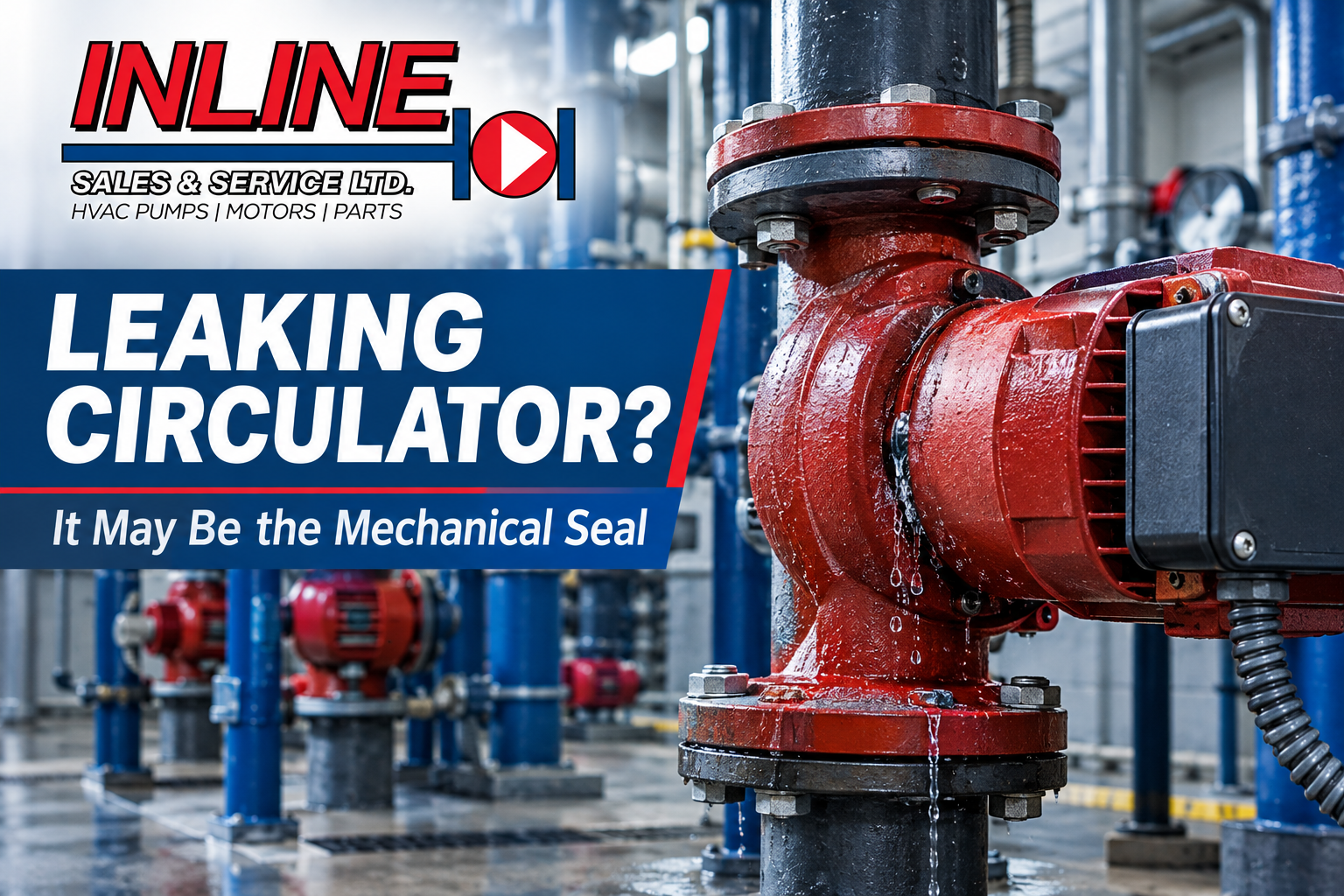
Why Is My Circulator Pump Leaking? It May Not Be the Gasket
A leaking circulator pump is a common problem in commercial HVAC and hydronic heating systems. One of the first things many technicians notice is water appearing around the pump flange or gasket area. It can look like the gasket is failing, but the actual source of the leak may be the mechanical seal inside the pump.
This is especially common with older Armstrong and Bell & Gossett circulator pumps, where a worn mechanical seal can allow water to travel along the shaft and appear to be leaking from somewhere else.
At Inline Sales & Service Ltd., we regularly repair leaking circulators and supply the replacement seals, gaskets and other pump repair parts needed to get equipment back into service.
Is the Gasket Actually Leaking?
When water is found around a circulator, it is natural to assume the flange gasket has failed. Sometimes it has — but not always.
A mechanical seal is designed to prevent water from escaping where the pump shaft passes through the pump housing. As the seal wears, becomes damaged, or experiences excessive heat or dry running, it can begin to leak.
The leaking water can then run down the pump housing, flange or motor bracket. By the time the leak is noticed, it may appear that the flange gasket is leaking when the mechanical seal is actually the problem.
This is why simply replacing the gasket may not solve the issue.
What Does a Mechanical Seal Do?
The mechanical seal is a critical component inside many centrifugal circulator pumps.
It creates a seal around the rotating pump shaft while allowing the shaft to turn. The seal typically consists of precision-machined faces that remain pressed together while the pump operates.
Over time, those sealing surfaces can wear.
Common causes of mechanical seal failure include:
Normal wear and age
Excessive operating temperatures
Dry running
Improper installation
Damaged or worn pump shafts
Corrosion
Contamination in the system water
Pump vibration or misalignment
Operating conditions outside the pump’s design parameters
Once the seal begins to fail, water can escape from the pump and create what appears to be a gasket leak.
Armstrong Circulator Pumps
Armstrong circulators are commonly found in commercial heating and hydronic applications. Depending on the model and age of the pump, replacement mechanical seals, gaskets and other components can often be used to repair the existing pump rather than replacing the entire unit.
Inline Sales & Service carries Armstrong pump repair parts, including mechanical seals, seal kits, gaskets, impellers, motors and other components. (Inline Sales & Services Ltd.)
In many cases, repairing the pump can be a more practical solution than replacing a complete circulator, particularly when the pump body and other major components are still in good condition.
Bell & Gossett Circulators
Bell & Gossett pumps are another common sight in commercial hydronic heating and HVAC systems throughout the Lower Mainland.
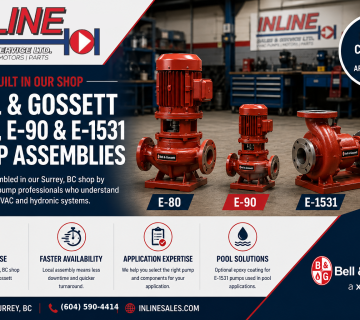
Bell & Gossett pumps use a variety of mechanical seals depending on the pump series and shaft size. For example, Inline Sales & Service stocks seal kits for several Bell & Gossett models, including Series 60, Series 90, Series 1510 and Series 1531. (Inline Sales & Services Ltd.)
Inline Sales & Service has been servicing Bell & Gossett equipment for more than 15 years and maintains an extensive inventory of Bell & Gossett repair parts. (Inline Sales & Services Ltd.)
How to Tell if the Mechanical Seal Is Leaking
If you find water around a circulator, don’t immediately assume the flange gasket is the problem.
A few things to check include:
1. Inspect the flange connection
Look closely at where the pump flange connects to the piping. If water is clearly coming from the gasket between the two flanges, the gasket may be the source.
2. Follow the water
Water doesn’t always leak directly from the point where it becomes visible. Look above the suspected leak and follow the path of the water back toward its source.
3. Inspect around the shaft and seal area
If water appears to be coming from behind the pump or around the shaft area, there is a good chance the mechanical seal is leaking.
4. Look for corrosion or mineral deposits
A slow mechanical seal leak can leave behind rust, scale or mineral deposits. These deposits can provide clues about where the water is actually coming from.
5. Check the pump condition
If the pump has been operating for many years, it may make sense to inspect the mechanical seal, shaft, bearings and other wear components at the same time rather than simply replacing one gasket.
Don’t Replace the Gasket Until You Find the Source
One of the most common mistakes we see is replacing a flange gasket without identifying the actual source of the leak.
If the mechanical seal is leaking, installing a new gasket won’t stop the water from escaping through the seal.
In some cases, the leak may also have damaged other components. A worn shaft, damaged seal seat or excessive shaft movement can cause a replacement mechanical seal to fail prematurely.
That’s why proper inspection is important before ordering parts.
Repair Instead of Replace
A leaking circulator doesn’t necessarily mean the pump needs to be replaced.
Depending on the pump’s condition, repairing it with a new mechanical seal, gasket, bearing assembly or other wear components can restore the pump and extend its service life.
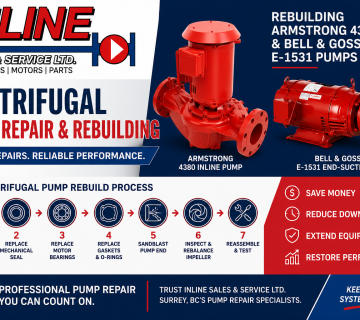
At Inline Sales & Service Ltd., our Surrey shop provides pump repair and rebuild services, including replacement of mechanical seals, motor bearings and gaskets. We also perform other pump repair work such as impeller trimming and balancing. (Inline Sales & Services Ltd.)
We work with a wide range of commercial and industrial pumps and can help identify the correct replacement components.
Need a Replacement Seal or Pump Part?
If you have a leaking Armstrong or Bell & Gossett circulator, Inline Sales & Service can help you identify the correct repair parts.
We stock a wide range of pump components, including:
Mechanical seals
Seal kits
Flange gaskets
Pump gaskets
Impellers
Shafts
Bearing assemblies
Couplings
Motors
Other pump repair components
Many parts are available directly through our online store, and we also have an extensive inventory available at our Surrey, BC shop. (Inline Sales & Services Ltd.)
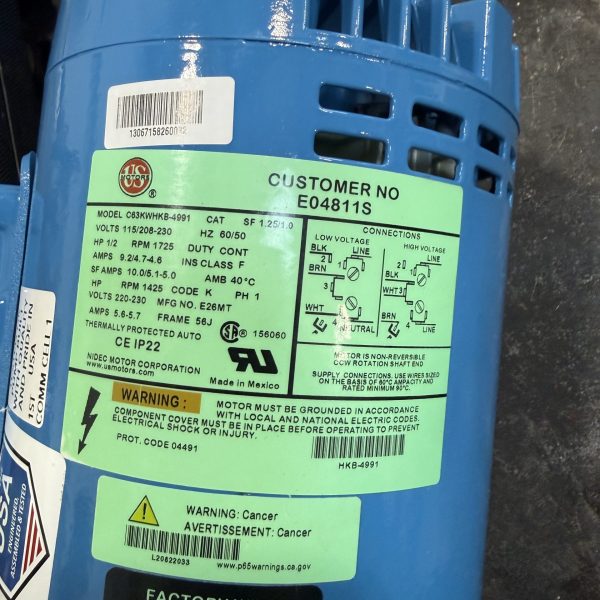
If you’re not sure which seal or gasket you need, provide us with the pump manufacturer, model number and any available nameplate information. Photos of the pump can also be helpful when identifying the correct replacement parts.
Local Pump Repair in Surrey, BC
Located at #104 – 18980 98 Avenue in Surrey, BC, Inline Sales & Service Ltd. specializes in commercial HVAC pumps, hydronic systems, pump repairs and replacement parts. We support contractors, building operators and maintenance teams throughout Surrey, Vancouver, the Lower Mainland and across Canada. (Inline Sales & Services Ltd.)
Whether you need a replacement mechanical seal for an Armstrong circulator, a Bell & Gossett seal kit, or a complete pump repair, our team can help you find the right solution.
Don’t assume that a leaking circulator needs a new gasket — the mechanical seal may be the real culprit.
Need help identifying a leaking pump or finding the correct repair part? Contact Inline Sales & Service Ltd. or visit our online store to browse our pump parts and repair components.

No comment