 Armstrong Pumps
 Bell & Gossett
 Taco Pumps
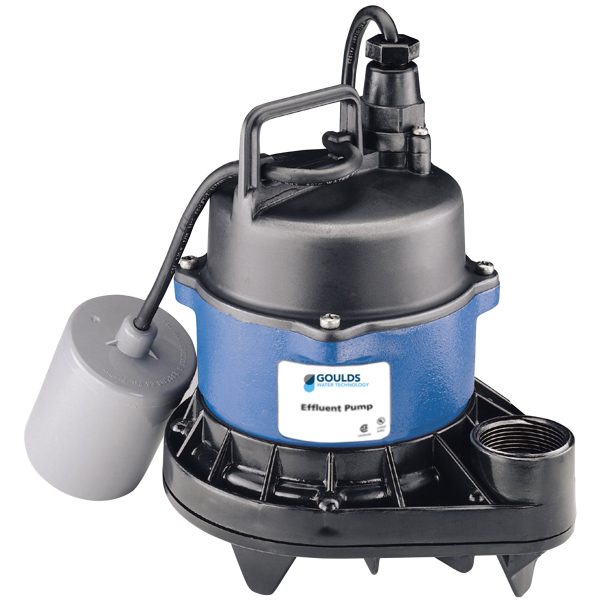
 Goulds Water Technology
 Grundfos Pumps
 Wilo & Scot Pumps
 Boilermag XT magnetic filter
 Circulator Pumps
 Hoffman Specialty
 John Crane
 McDonnell & Miller
 Heat Exchangers
 B&G Power Packs
 Weg Motors
 TechTop Motors
 US Motors & Nidec
 Baldor Motors
 SKF Motor Bearings
 Motor Repairs
 Armstrong
 Hoffman Specialty
 SKF Bearings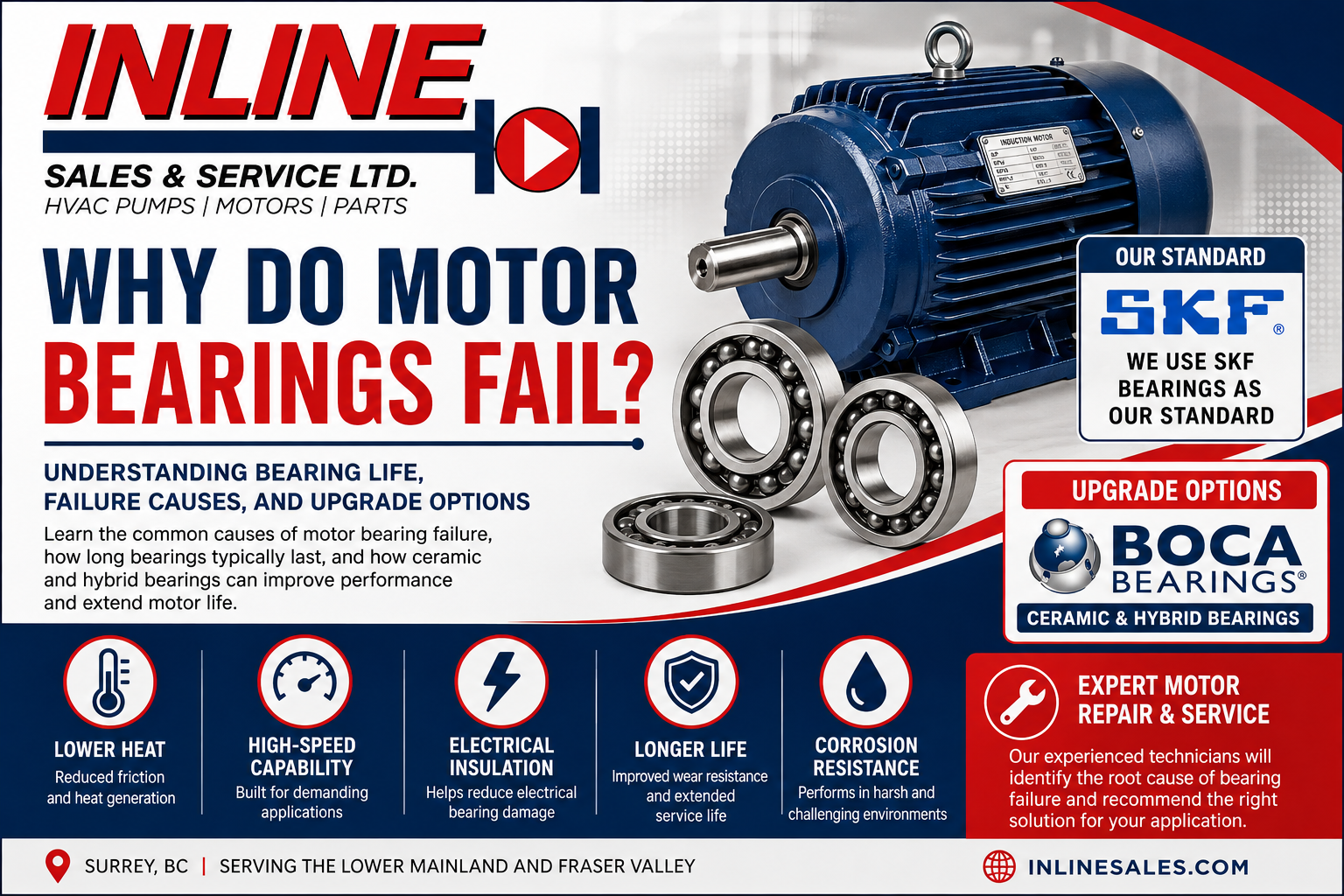
Why Do Motor Bearings Fail?
Understanding Bearing Life, Failure Causes, and Upgrade Options
Motor bearings are one of the most important components inside an electric motor. They support the rotating shaft, reduce friction, and allow the motor to operate smoothly and efficiently. When a bearing begins to fail, however, the results can range from increased vibration and noise to overheating, shaft damage, and eventually complete motor failure.
At Inline Sales & Service Ltd., we regularly inspect and repair motors used in commercial HVAC, pumping, and mechanical systems. Understanding why bearings fail—and recognizing the warning signs early—can help prevent unexpected equipment downtime and costly repairs.
How Long Do Motor Bearings Typically Last?
There isn’t one specific answer to how long a motor bearing will last. Bearing life depends on several factors, including motor speed, operating temperature, load, lubrication, alignment, installation, contamination, and operating environment.
Under proper operating conditions, a quality motor bearing can often provide 20,000 to 40,000+ operating hours of service. Some applications may achieve significantly longer life, while motors operating under heavy loads, high temperatures, contamination, excessive vibration, or poor alignment may experience considerably shorter bearing life.
For example, a motor running continuously 24 hours a day could accumulate approximately 8,760 operating hours per year. A bearing rated for 40,000 operating hours could therefore have a theoretical service life of several years under the right conditions.
It’s important to remember that bearing life ratings are not guarantees. Actual service life depends heavily on the application and operating conditions.
What Causes Motor Bearings to Fail?
1. Lack of Proper Lubrication
Lubrication is critical to bearing life. Too little grease can cause excessive friction and heat, while too much grease can also create problems by increasing operating temperature.
Using the wrong grease or mixing incompatible lubricants can further reduce bearing life.
Proper lubrication should always follow the motor and bearing manufacturer’s recommendations.
2. Excessive Heat
Heat is one of the biggest enemies of bearings.
High operating temperatures can break down lubricant, reduce grease life, and accelerate bearing wear. Motors operating in hot mechanical rooms, near boilers, or in poorly ventilated areas can be particularly susceptible.
A motor that is consistently running hotter than normal should be investigated before the bearing fails.
3. Misalignment
Motor and pump alignment is extremely important in pumping applications.
Poor alignment can place additional radial or axial loads on the motor bearings. Even if the motor itself is operating correctly, excessive mechanical loading can dramatically reduce bearing life.
Proper alignment during installation and after equipment repairs can help prevent premature failures.
4. Excessive Loads
Bearings are designed to operate within specific load limits. Excessive belt tension, pump loads, unbalanced rotating components, or other mechanical issues can put additional stress on the bearings.
If a bearing repeatedly fails earlier than expected, it is important to determine why it failed rather than simply replacing the bearing and putting the motor back into service.
5. Contamination
Dirt, moisture, dust, chemicals, and other contaminants can enter a bearing and damage the internal rolling surfaces.
Contamination can cause pitting, corrosion, increased friction, and premature wear. Motors operating in harsh environments require additional consideration when selecting and protecting bearings.
6. Electrical Damage
In VFD applications, electrical currents can sometimes pass through the motor bearings. This can cause a condition known as electrical fluting or bearing fluting, where small electrical discharges damage the bearing raceways.
Over time, this damage can create a recognizable washboard-like pattern on the bearing surface and lead to increased vibration and noise.
For motors operated with variable frequency drives, proper grounding and shaft-grounding solutions may be necessary depending on the motor and application.
7. Improper Installation
Even a high-quality bearing can fail prematurely if it is installed incorrectly.
Using excessive force, striking the wrong bearing ring, installing a bearing at an angle, or using improper tools can damage the bearing before the motor ever goes back into service.
Proper bearing installation is essential for achieving the expected service life.
Standard SKF Bearings at Inline Sales & Service
At Inline Sales & Service Ltd., we use SKF bearings as our standard bearing option when rebuilding and repairing motors.
SKF is a well-established bearing manufacturer with a wide range of bearing solutions for industrial and commercial applications. Using quality bearings helps provide our customers with a dependable replacement while maintaining the performance expected from the motor.
However, depending on the application, there may be situations where upgrading the bearing is worth considering.
Ceramic and Hybrid Bearings as an Upgrade
Inline Sales & Service Ltd. also offers Boca Bearings ceramic and hybrid bearing options as an upgrade.
These bearings can provide advantages in specific applications, particularly where high speeds, reduced friction, electrical current through the bearings, or demanding operating conditions are concerns.
What Is a Ceramic Bearing?
A full ceramic bearing uses ceramic materials for both the rolling elements and bearing components.
Ceramic materials are extremely hard and lightweight, which can provide several performance advantages.
Potential benefits include:
Lower friction
Reduced heat generation
High-speed capability
Excellent wear resistance
Resistance to corrosion
Reduced weight
Electrical insulation
Full ceramic bearings are generally a specialty option and are best suited to applications where their specific characteristics provide a meaningful advantage.
What Is a Hybrid Ceramic Bearing?
A hybrid ceramic bearing combines traditional steel bearing rings with ceramic rolling elements, typically silicon nitride balls.
This provides many of the advantages associated with ceramic rolling elements while maintaining the strength and practicality of steel races.
Hybrid bearings can offer:
Lower friction
Reduced operating temperatures
Excellent wear resistance
High-speed performance
Reduced electrical conductivity through the rolling elements
Improved resistance to certain types of electrical bearing damage
Longer potential service life in appropriate applications
One of the biggest advantages of a hybrid bearing in certain motor applications is its ability to help reduce the effects of electrical currents passing through the bearing. This can make hybrid ceramic bearings an attractive upgrade for some VFD-driven motors.
Are Ceramic Bearings Worth the Upgrade?
The answer depends on the application.
For a standard motor operating under normal conditions, a quality SKF bearing may provide excellent service life without the need for an upgraded bearing.
However, a ceramic or hybrid bearing may be worth considering when a motor operates under demanding conditions such as:
Variable frequency drive operation
High-speed applications
High operating temperatures
Frequent cycling
Heavy-duty industrial service
Applications where electrical bearing damage has occurred
Equipment where reducing friction and heat is important
Rather than automatically upgrading every motor, we recommend looking at the specific operating conditions and failure history of the equipment.
Don’t Just Replace the Bearing—Find the Cause
When a motor bearing fails prematurely, replacing the bearing is only part of the repair.
Our technicians look at the condition of the motor and bearing to help determine what may have caused the failure. Signs such as discoloration, pitting, fluting, grease breakdown, excessive wear, or damage to the bearing races can provide important information.
If the underlying problem is excessive heat, misalignment, electrical current, contamination, or an overloaded bearing, simply installing another standard bearing may result in another premature failure.
The goal isn’t just to replace the bearing. It’s to understand why it failed in the first place.
Motor Repair and Bearing Replacement in Surrey, BC
At Inline Sales & Service Ltd., we provide motor and pump repair services for commercial and industrial customers throughout Surrey, the Lower Mainland, Vancouver, and the Fraser Valley.
Our standard motor bearing replacement uses quality SKF bearings, with Boca Bearings ceramic and hybrid ceramic options available as an upgrade when the application calls for additional performance.
If you’re experiencing motor noise, vibration, overheating, or repeated bearing failures, our team can help evaluate the problem and determine the appropriate repair and bearing solution.
Don’t wait for a bearing failure to shut down your equipment. Contact Inline Sales & Service Ltd. to discuss your motor repair or bearing replacement needs.
Inline Sales & Service Ltd.
Commercial Pumps • Motors • Pump Repair • Motor Repair • Mechanical Services
Surrey, BC | Serving the Lower Mainland and Fraser Valley