 Armstrong Pumps
 Bell & Gossett
 Taco Pumps
 Goulds Water Technology
 Grundfos Pumps
 Wilo & Scot Pumps
 Boilermag XT magnetic filter
 Circulator Pumps
 Hoffman Specialty
 John Crane
 McDonnell & Miller
 Heat Exchangers
 B&G Power Packs
 Weg Motors
 TechTop Motors
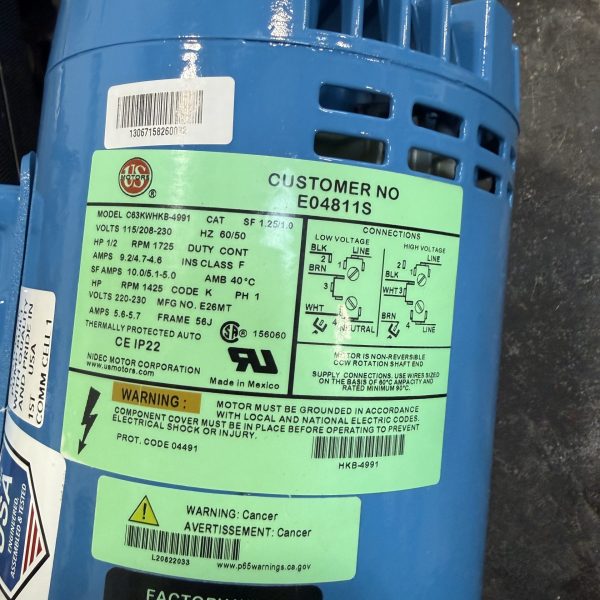
 US Motors & Nidec
 Baldor Motors
 SKF Motor Bearings
 Motor Repairs
 Armstrong
 Hoffman Specialty
 SKF Bearings
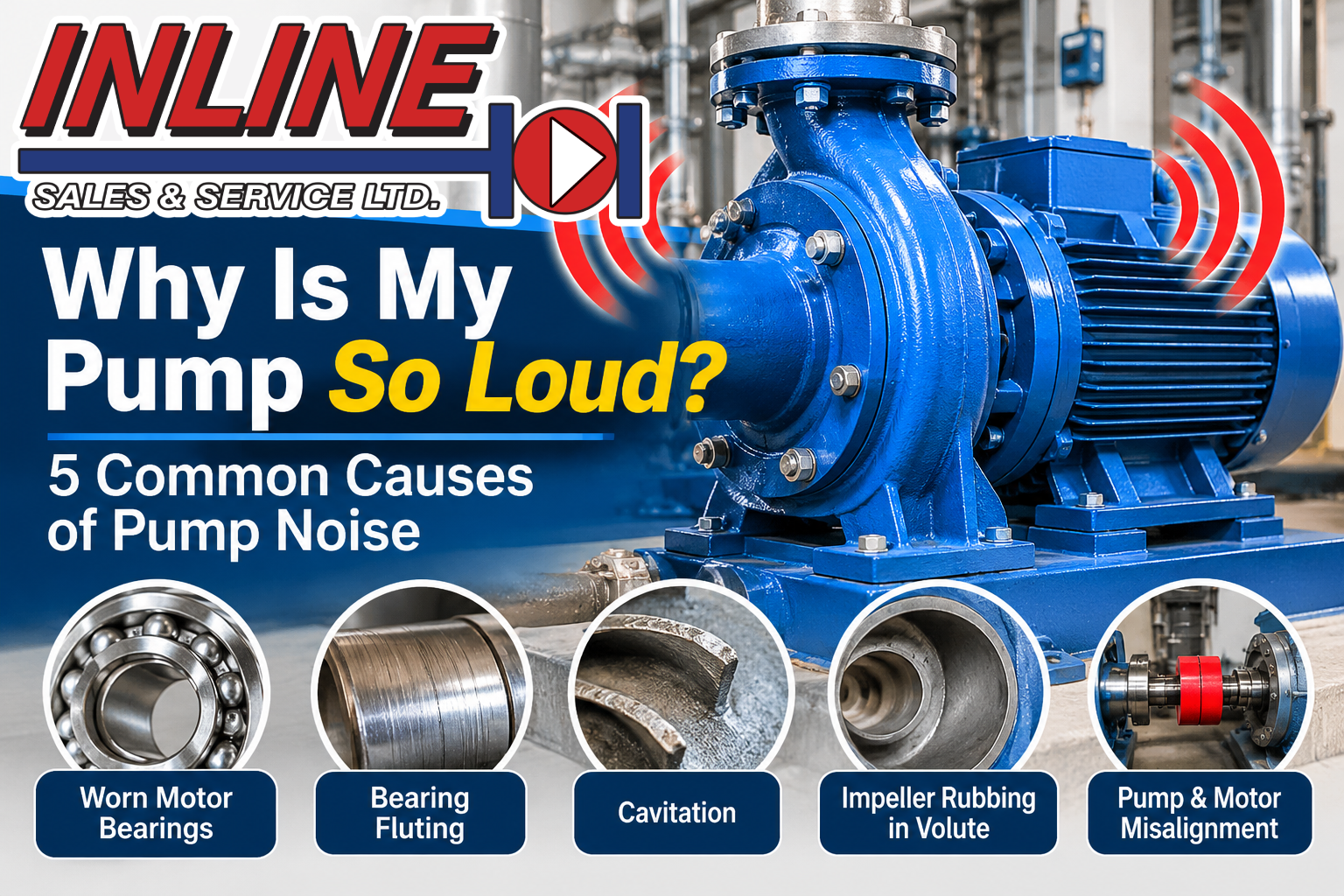
Why Is My Pump So Loud? Common Causes of Excessive Pump Noise and What to Look For
A noisy pump is often an early warning sign that something isn’t operating as it should. Whether it’s a commercial HVAC circulation pump, a booster pump, or an industrial centrifugal pump, unusual noise should never be ignored.
Pumps are designed to operate relatively smoothly and quietly. When a pump starts making excessive noise, grinding, rattling, squealing, or vibrating, it may indicate a mechanical issue, hydraulic problem, or installation-related concern.
At Inline Sales & Service Ltd., we work with commercial pumps and motors every day, and many pump failures can be traced back to warning signs that were present long before the equipment stopped operating.
Here are five common reasons why your pump may be loud and what you should look for.
1. Worn or Damaged Motor Bearings
One of the most common causes of pump noise is worn or damaged motor bearings.
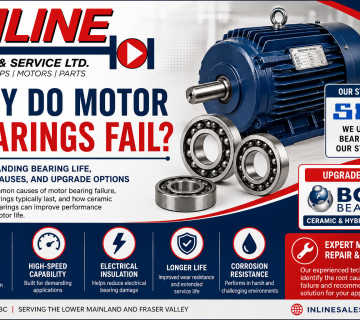
Motor bearings support the rotating shaft and allow the motor to operate smoothly. Over time, bearings can wear due to age, excessive heat, moisture, contamination, improper lubrication, or prolonged vibration.
Common warning signs include:
- Grinding or growling noises coming from the motor.
- High-pitched squealing or whining.
- Excessive motor vibration.
- Motor running hotter than normal.
- Noticeable shaft movement or bearing play.
If the bearings are worn, they should be inspected and replaced before they cause further damage to the motor. Operating a motor with failing bearings can eventually result in shaft damage, rotor contact, or complete motor failure.
2. Bearing Fluting (Electrical Discharge Damage)
Looking To Maximize Electric Motor Reliability And Life? Here Are 5 Must-know Tips! | Samotics
Bearing fluting is a type of bearing damage commonly associated with variable frequency drives (VFDs).
When a motor operates on a VFD, electrical currents can sometimes travel through the motor shaft and discharge through the bearings. These electrical discharges create microscopic pits in the bearing raceways. Over time, the damage develops into a series of evenly spaced grooves known as fluting.
Common warning signs include:
- A repetitive humming or rumbling noise.
- Increased motor vibration.
- Premature bearing failure.
- Noise that becomes more noticeable as the motor operates.
Fluting can be particularly problematic in commercial HVAC applications where motors operate continuously on VFDs.
Proper shaft grounding, insulated bearings, and appropriate VFD installation practices can help reduce the risk of electrical bearing damage.
It is important to identify the underlying cause of fluting rather than simply replacing the bearings, as the problem may return if the electrical discharge path is not addressed.
3. Cavitation – A Common Cause of Pump Noise
Cavitation in Centrifugal Pump: Causes and Solutions – Water & Wastewater
Cavitation is another common reason why centrifugal pumps become noisy. It occurs when the pressure inside the pump drops below the liquid’s vapour pressure, causing vapour bubbles to form. As these bubbles move into higher-pressure areas of the pump, they collapse against internal surfaces.
This process can cause significant damage to the impeller and other internal pump components.
Common warning signs include:
- A sound similar to gravel or marbles moving through the pump.
- Excessive vibration.
- Reduced pump performance and flow.
- Pitting or erosion on the impeller.
- Premature mechanical seal and bearing failure.
Cavitation can be caused by several factors, including:
- Insufficient suction pressure.
- Undersized or restricted suction piping.
- Plugged suction strainers.
- Excessive fluid temperature.
- Operating the pump outside its intended duty point.
- Insufficient NPSH (Net Positive Suction Head).
Cavitation should be addressed as soon as possible. Continued operation can result in serious impeller damage and costly pump repairs.
4. Impeller Rubbing Against the Volute
Solución de problemas de la bomba centrífuga: la bomba se calienta
If you hear a metallic scraping, grinding, or rubbing noise coming from your pump, the impeller may be contacting the volute (pump casing).
The impeller is designed to rotate within the volute with a specific clearance. If that clearance is compromised, the rotating impeller can make contact with the stationary pump housing.
Some common reasons this happens include:
- Worn or damaged pump bearings.
- Excessive shaft movement or deflection.
- Incorrect impeller clearance.
- A bent or damaged shaft.
- Thermal expansion.
- Foreign objects or debris inside the pump.
- Improper pump assembly following a repair.
Impeller rubbing can cause damage to both the impeller and volute. It can also increase motor load, generate excessive heat, and eventually result in pump failure.
During a pump inspection, the impeller, shaft, bearings, and internal clearances should be checked to determine the cause of the contact.
Simply replacing the impeller may not resolve the problem if the underlying issue is excessive shaft movement or incorrect bearing alignment.
5. Pump and Motor Misalignment
Fluke RotAlign Core Laser Shaft Alignment Tool for Standard Machines | Fluke
Pump and motor misalignment is another common source of excessive noise and vibration, particularly on base-mounted centrifugal pumps.
When the pump shaft and motor shaft are not properly aligned, additional forces are placed on the coupling, bearings, and mechanical seal.
Even a small amount of misalignment can create problems over time, especially on pumps operating continuously in commercial HVAC systems.
Common warning signs include:
- Excessive vibration throughout the pump assembly.
- Unusual humming or rattling noises.
- Premature motor or pump bearing failure.
- Mechanical seal leaks.
- Excessive coupling wear.
- Increased operating temperatures.
Pump and motor alignment should be checked using appropriate alignment equipment. Laser alignment is an effective method of identifying and correcting shaft misalignment.
It is also important to inspect the pump base, mounting bolts, and piping connections. Soft foot, loose mounting hardware, or pipe strain can contribute to alignment problems.
Proper alignment helps extend bearing and mechanical seal life while improving overall pump reliability.
Why You Shouldn’t Ignore a Noisy Pump
Unusual pump noise is often an indication that something is beginning to fail. Continuing to operate a noisy pump without identifying the cause can turn a relatively straightforward repair into a much larger expense.
For example, replacing worn motor bearings may be a simple repair, but allowing those bearings to fail completely could result in shaft damage, impeller contact, or damage to the pump assembly.
The same applies to cavitation and bearing fluting. Identifying the underlying cause early can help prevent repeat failures and unnecessary downtime.
If your pump suddenly becomes louder, starts vibrating excessively, or develops an unusual grinding or rattling sound, it is worth having it inspected.
Always follow appropriate electrical isolation and lockout procedures before inspecting or working on pump equipment.
Inline Sales & Service Ltd. – Commercial Pump Repairs and Service
E&G Reparaciones – Mantenimiento y Reparación Electromecánica
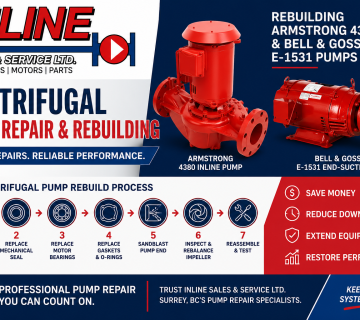
At Inline Sales & Service Ltd., we specialize in commercial pump repairs, pump maintenance, and pump solutions for commercial HVAC and mechanical systems.
Our Surrey, BC workshop services pumps from many major manufacturers, including Armstrong, Bell & Gossett, Grundfos, Goulds, and other leading pump brands.
Our pump repair services include:
- Pump and motor bearing replacement.
- Mechanical seal and gasket replacement.
- Impeller inspection, trimming, and balancing.
- Pump shaft and internal component inspections.
- Pump and motor alignment checks.
- Pump rebuilding and custom pump assemblies.
- Troubleshooting excessive pump noise and vibration.
Whether you’re dealing with a noisy circulator, a vibrating end-suction pump, or a larger commercial centrifugal pump, our team can help identify the problem and determine the appropriate repair.
Don’t wait until a noisy pump becomes a failed pump.
Contact Inline Sales & Service Ltd. for commercial pump repairs, parts, and service.
Inline Sales & Service Ltd.
Surrey, BC | Serving Vancouver, the Lower Mainland and Fraser Valley.
Visit us online at www.inlinesales.com for pumps, repair parts, and service information.