 Armstrong Pumps
 Bell & Gossett
 Taco Pumps
 Goulds Water Technology
 Grundfos Pumps
 Wilo & Scot Pumps
 Boilermag XT magnetic filter
 Circulator Pumps
 Hoffman Specialty
 John Crane
 McDonnell & Miller
 Heat Exchangers
 B&G Power Packs
 Weg Motors
 TechTop Motors
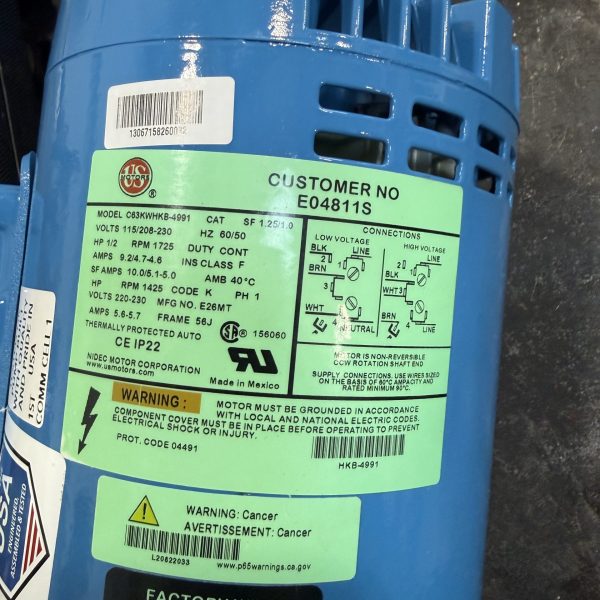
 US Motors & Nidec
 Baldor Motors
 SKF Motor Bearings
 Motor Repairs
 Armstrong
 Hoffman Specialty
 SKF Bearings
Why Pump Seals Fail: Common Causes and How to Prevent Costly Downtime
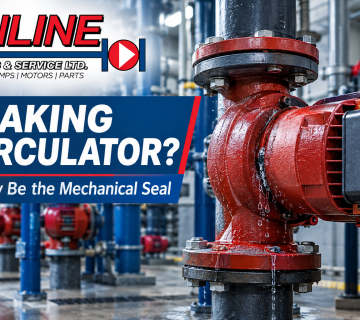
Pump seals are one of the most critical components in any centrifugal pump system. Their primary function is to prevent fluid from leaking where the rotating shaft exits the pump casing. When a seal fails, the result can be anything from minor leakage to catastrophic equipment damage, unplanned downtime, and expensive repairs.
At Inline Sales & Services Ltd., we regularly repair pumps throughout the Lower Mainland and often find that seal failures are symptoms of underlying system issues rather than defects in the seal itself. Understanding why seals fail can help facility managers, maintenance teams, and operators extend equipment life and reduce operating costs.
What Is a Mechanical Seal?
A mechanical seal consists of two precision-machined sealing faces: one rotating with the pump shaft and one stationary in the seal chamber. These faces operate with an extremely thin film of liquid between them, providing lubrication and cooling while preventing leakage.
Because seal faces operate under such tight tolerances, even small changes in operating conditions can significantly impact seal life.
Common Causes of Pump Seal Failure
1. Dry Running
Dry running is one of the leading causes of mechanical seal failure.
Mechanical seals rely on the pumped liquid to lubricate and cool the seal faces. When a pump operates without sufficient liquid, friction generates excessive heat, causing seal faces to crack, warp, or rapidly wear.
Common causes of dry running include:
- Closed suction valves
- Empty supply tanks
- Loss of prime
- Blocked suction lines
- Air entering the suction piping
Even a few minutes of dry operation can permanently damage a seal.
2. Incorrect Pump Rotation
Improper pump rotation can quickly damage seals and other pump components.
When a pump rotates in the wrong direction, hydraulic forces change, flow rates decrease, and the seal may not receive proper lubrication and cooling. This often results in overheating and premature seal wear.
Always verify motor rotation during installation and after electrical maintenance work.
3. Shaft Misalignment
Pump and motor shafts must be properly aligned to minimize vibration and shaft movement.
Misalignment places excessive stress on the seal faces and elastomer components. Over time, this can cause uneven wear, leakage, and eventual seal failure.
Precision laser alignment can significantly improve seal life and overall equipment reliability.
4. Excessive Vibration
Vibration is a major contributor to premature seal failure.
Common sources of vibration include:
- Misalignment
- Bent shafts
- Worn bearings
- Cavitation
- Pipe strain
- Unbalanced impellers
Excessive vibration prevents the seal faces from maintaining proper contact and can damage secondary sealing components.
5. Cavitation
Cavitation occurs when vapor bubbles form and collapse inside the pump due to insufficient suction pressure.
These imploding bubbles create shockwaves that can damage impellers, bearings, and seals. Pumps experiencing cavitation often exhibit increased vibration, noise, and shortened seal life.
Signs of cavitation include:
- A grinding or rattling sound
- Reduced pump performance
- Excessive vibration
- Premature component wear
6. Improper Seal Selection
Not all mechanical seals are designed for the same application.
Selecting the wrong seal materials for the pumped fluid, temperature, pressure, or operating conditions can lead to rapid deterioration.
Factors that should be considered when selecting a seal include:
- Fluid compatibility
- Operating temperature
- System pressure
- Shaft speed
- Presence of abrasives or solids
Using the correct seal design and materials can dramatically increase service life.
7. Contaminated or Abrasive Fluids
Mechanical seals are precision components. Abrasive particles such as sand, scale, rust, or process solids can become trapped between the seal faces and cause accelerated wear.
In many industrial applications, contaminated fluids create grooves in seal faces, resulting in leakage and premature failure.
Proper filtration and system maintenance can help minimize abrasive damage.
8. Thermal Shock and Temperature Extremes
Rapid temperature changes can cause seal components to expand and contract at different rates.
Thermal shock may crack seal faces or damage elastomer components, especially in systems experiencing frequent start-stop cycles or sudden temperature fluctuations.
Ensuring proper warm-up procedures and selecting suitable seal materials can reduce these risks.
9. Worn Bearings or Shaft Movement
Mechanical seals are designed to operate with minimal shaft movement.
When pump bearings become worn, the shaft may experience excessive radial or axial movement. This movement disrupts the seal faces and often leads to leakage.
In many cases, replacing a failed seal without addressing bearing issues results in repeated failures.
How to Extend Mechanical Seal Life
While seal wear is inevitable over time, proper maintenance can significantly increase seal longevity.
Best practices include:
- Verify pump rotation before startup
- Maintain proper alignment
- Monitor vibration levels
- Prevent dry running conditions
- Inspect bearings regularly
- Ensure proper suction conditions
- Select seals suitable for the application
- Maintain clean operating fluids
- Address leaks immediately
Trust Inline Sales & Services Ltd. for Pump Seal Repairs
Mechanical seal failures are often indicators of larger pump system issues. Simply replacing the seal without diagnosing the root cause may lead to repeated failures and unnecessary costs.
At Inline Sales & Services Ltd., our experienced technicians inspect the entire pump assembly, including bearings, shafts, impellers, alignment, and operating conditions, to determine why a seal failed and recommend the appropriate corrective action.
Whether you require emergency repairs, seal replacement, pump rebuilding, or preventive maintenance, our team is ready to help keep your equipment operating reliably throughout the Lower Mainland.
Contact Inline Sales & Services Ltd.
If your pump is leaking or experiencing repeated seal failures, contact Inline Sales & Services Ltd. today for professional troubleshooting, repair, and maintenance services.